
How To Build A Fire In Cold Weather
Cold Weather Fire Starting Techniques
Starting a fire in cold weather is a fundamental survival skill that demands both knowledge and practice. In a cold environment, the ability to start a fire can mean the difference between staying warm, being able to cook, and potentially signaling for help.
As a prepper, understanding the unique challenges and techniques for starting a fire in the snow, wet, and freezing conditions is crucial. The first step in starting a fire in cold weather is selecting the right location.
You need to find a spot that is sheltered from the wind and away from snow-laden branches that could collapse under the heat of the fire. It’s also important to consider the direction of the wind to ensure that your fire remains lit and is visible for rescue signals if needed.
Once you have found a suitable location, clear as much snow as possible from the area. You can use a log or flat stones to create a platform to insulate your fire from the cold and wet ground.
The next challenge is gathering and preparing your kindling and fuel. In wet conditions, finding dry tinder can be difficult. Look for dead branches and twigs that are off the ground, as these are more likely to be dry.
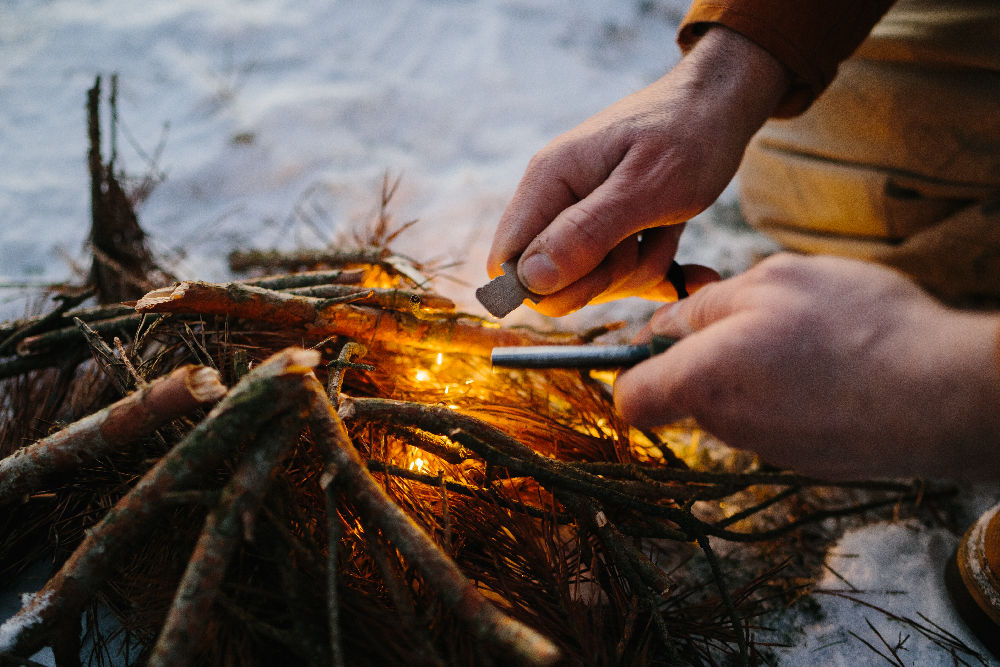
Pine needles, birch bark, and lichen can also serve as good tinder, as they tend to stay dry under their protective layers. If you carry waterproof matches or a lighter, ensure they are accessible and dry.
It’s also a good idea to carry a reliable fire starter, such as magnesium fire starters or fire sticks, which can ignite even when wet. The construction of your fire is key. A teepee structure, where kindling is arranged around a central point, allows for airflow and concentrates heat, making it easier to ignite your fuel.
Start with your tinder in the center and build a teepee of kindling around it. Once the fire starts, gradually add larger pieces of wood, being careful not to smother the flames. In extremely cold conditions, the heat of your fire can be lost quickly to the surrounding environment.
Creating a reflector out of logs or rocks behind your fire can help direct the heat towards your shelter or where you are sitting. This method maximizes the efficiency of your fire, ensuring you get the most warmth possible.
Another aspect to consider is the maintenance of your fire. In snowy conditions, your fire may need more attention as melting snow can dampen your fuel. Keep a steady supply of dry wood on hand to add to the fire as needed.
If you’re in a survival situation, conserving your energy is important, so balance the effort of maintaining the fire with your need for rest and warmth.
Cold Weather Fire Safety Tips
Knowing how to properly extinguish your fire is just as important as starting it.
Always ensure your fire is completely out before leaving it unattended. In winter, use snow to douse the flames and cool the embers. This practice prevents the risk of forest fires and also follows the principles of Leave No Trace.
Mastering fire starting techniques in cold weather is an essential skill for any prepper. With the right knowledge, tools, and practice, you can ensure that you have the means to stay warm, cook, and signal for help in a cold weather survival situation. Remember, the ability to create and maintain a fire can be your most vital resource in the harsh conditions of winter.
