How to Secure Your Rural Property: 6 Practical Ways to Keep Trespassers Out
Simple, affordable security improvements to protect your country home, land, and valuable equipment.
There’s nothing quite like living in the country. You have room to breathe, space to enjoy the outdoors, and the freedom to make your property your own.
But having extra land also creates a few challenges.
Long driveways, wooded boundaries, isolated barns, and outbuildings can make it difficult to know when someone enters your property. And while most visitors have harmless intentions, trespassing and theft are legitimate concerns for rural homeowners.
Fortunately, protecting your rural property doesn’t require an expensive security system or turning your home into a fortress.
A few practical improvements can help discourage unwanted visitors, protect valuable belongings, and make your property more secure.
Here are six good places to start.
1. Make Your Property Boundaries Easy to Recognize
One of the simplest ways to discourage trespassing is to clearly identify where your private property begins.
Country property lines aren’t always obvious. A wooded trail, open pasture, or old farm road may look like public access to someone unfamiliar with the area.
Clear boundaries help prevent confusion and let visitors know they’re entering private land.
Consider these improvements:
- Post No Trespassing signs at common entry points.
- Mark wooded property lines with visible signs or markers.
- Install gates across private farm lanes and access roads.
- Use fencing around gardens, livestock pens, and equipment storage areas.
- Clearly identify your main entrance so legitimate visitors know where to go.
Before installing permanent fencing, make sure you know where your property lines are located.
Review existing surveys, deeds, and official property records. If the boundaries are uncertain, a licensed surveyor can help establish them.
Also, check state and local trespassing laws. Some areas have specific requirements for posting private property signs.
Remember, signs won’t stop every determined trespasser. However, they can discourage casual entry and eliminate misunderstandings about property ownership.
2. Make Your Driveway Your First Line of Defense
For many rural homeowners, the driveway is the most important security location on the entire property.
A long driveway offers wonderful privacy, but it can also make it difficult to know when someone approaches.
Delivery drivers, contractors, neighbors, and unexpected visitors may all use the same entrance.
Fortunately, a few simple additions can make a big difference.
Install a driveway alarm.
A driveway alarm provides an early warning when someone enters your property.
Several types are available:
- Motion sensors that detect movement
- Electromagnetic sensors that detect vehicles
- Wireless systems that alert you inside your home
When choosing an alarm, consider the distance between the driveway entrance and your house.
Trees, hills, buildings, and uneven terrain may affect wireless signal performance.
Consider installing a gate.
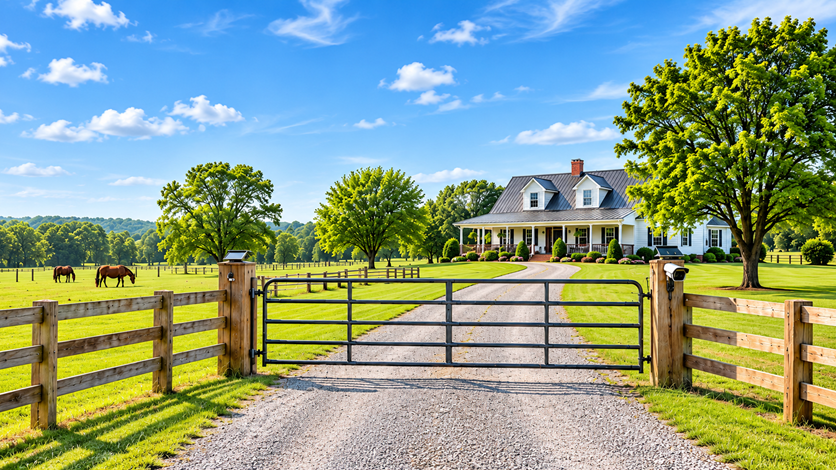
Even a basic farm gate with a sturdy latch makes it clear that your driveway is private.
A locked gate can also help discourage unauthorized vehicle access.
Create a convenient delivery area.
If you receive frequent packages, consider installing a weatherproof delivery box near the entrance.
This gives delivery drivers a designated location without requiring them to travel farther onto your property.
The goal isn’t to discourage welcome visitors. It’s to make your entrance easier to manage and more difficult for unwanted visitors to misuse.
3. Install Outdoor Lighting Where It Matters Most
Anyone who lives in the country knows how dark the nights can become.
Without nearby streetlights, it’s sometimes difficult to see activity around buildings, vehicles, and entrances.
Good security lighting helps solve that problem.
You don’t need to illuminate every acre. Instead, focus on areas where someone might approach your buildings or equipment.
Good locations include:
- Front and back doors
- Garage entrances
- Barns and storage sheds
- Equipment parking areas
- Walkways between buildings
- Driveway entrances and gates
Motion-activated lighting is especially useful.
These lights turn on when movement is detected, allowing you to notice activity without keeping everything illuminated throughout the night.
Solar-powered security lights can be another good option, especially around distant buildings where electrical wiring would be expensive.
However, solar lighting requires adequate sunlight and may perform less effectively during cloudy winter weather.
Position lights carefully to avoid disturbing neighbors or creating glare that interferes with security cameras.
Besides improving security, outdoor lighting makes everyday activities around your property safer after sunset.
4. Use Security Cameras to Watch Important Areas
Security cameras have become increasingly popular among rural property owners.
They’re especially helpful when buildings, gates, and entrances are spread across several acres.
But here’s something important to remember.
You don’t need a camera watching every inch of your land.
The secret is positioning cameras where they provide the most useful coverage.
Start with:
- Your main driveway
- Front and back doors
- Garage entrances
- Barns and workshops
- Equipment storage areas
- Remote gates and access roads
There are several camera types worth considering.
Wi-Fi security cameras work well around homes and buildings with reliable wireless internet connections.
Cellular security cameras use mobile networks and can be useful for distant gates, wooded trails, and remote locations.
Trail cameras are often a practical choice for areas without electricity. Many models capture photos or videos when motion is detected.
Before purchasing a camera, compare its nighttime performance, power requirements, image quality, storage options, and possible subscription fees.
Also, respect neighboring properties and applicable privacy laws when positioning cameras.
Remember that cameras are primarily monitoring tools. They can help document unexpected activity, but they don’t physically prevent trespassing.
For better protection, combine them with locks, gates, lighting, and other security improvements.
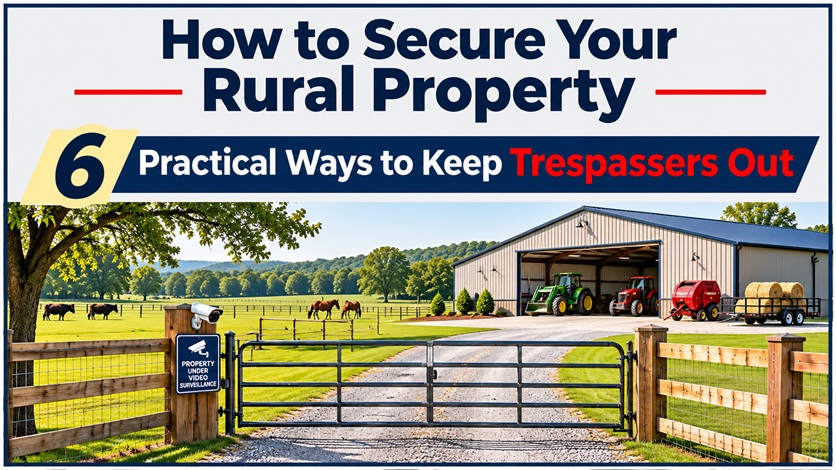
5. Keep Gates, Fences, and Access Roads Secure
Many country properties have more possible entrances than their owners realize.
Old logging roads, livestock gates, wooded trails, and unused farm lanes can provide access without anyone using the main driveway.
That’s why it’s important to periodically inspect your property.
Look for:
- Broken fencing
- Damaged or missing gate latches
- Worn locks
- Missing property signs
- Unused roads that remain accessible
- Areas where vegetation hides entrances
Sometimes, replacing a damaged lock or repairing a loose gate is all that’s needed.
If a secondary access road is rarely used, consider keeping it gated when practical.
However, don’t block public roads, legal easements, emergency access routes, or access rights belonging to neighboring landowners.
And remember, fencing doesn’t have to surround your entire property to be useful.
Strategic fencing around the house, livestock areas, equipment storage, and other important locations may provide good protection without the expense of enclosing every acre.
6. Protect Your Barns, Workshops, and Storage Buildings
It’s easy to focus on securing the house while overlooking the buildings farther away.
Unfortunately, barns, detached garages, storage sheds, and workshops often contain some of the most valuable items on a rural property.
Think about your tools, generators, chainsaws, lawn equipment, tractors, fuel, and farm supplies.
Those belongings can represent a substantial investment.
Start by inspecting doors, windows, hinges, and locks.
A strong padlock won’t provide much protection if the door frame is damaged or the latch can easily be removed.
Consider these precautions:
- Reinforce weak doors and door frames.
- Replace damaged locks and hinges.
- Install tamper-resistant hardware.
- Keep valuable equipment out of sight.
- Use curtains or window coverings where appropriate.
- Install motion lights around frequently used buildings.
- Consider cameras near buildings containing expensive equipment.
Another smart idea is to create an inventory of valuable belongings.
Keep photographs, serial numbers, purchase receipts, and equipment descriptions in a secure location.
These records can be extremely helpful when reporting theft or filing an insurance claim.
Start With the Security Improvements That Matter Most
Protecting a rural property doesn’t mean spending thousands of dollars on security equipment.
In many cases, the most effective improvements are surprisingly simple.
Clearly marked boundaries, secure gates, dependable locks, outdoor lighting, and strategically placed cameras can all help discourage unauthorized entry.
The important thing is to identify your property’s most vulnerable areas and address them first.
Maybe your driveway needs an alarm. Perhaps a barn door needs a stronger lock. Or you might discover that an old access road should be secured.
Start with one improvement and build from there.
After all, the purpose of property security isn’t to make country living more complicated.
It’s to help protect the home, land, animals, and valuable belongings that make rural life so rewarding.
A little prevention today can provide greater peace of mind tomorrow.